
Heritage & Theology
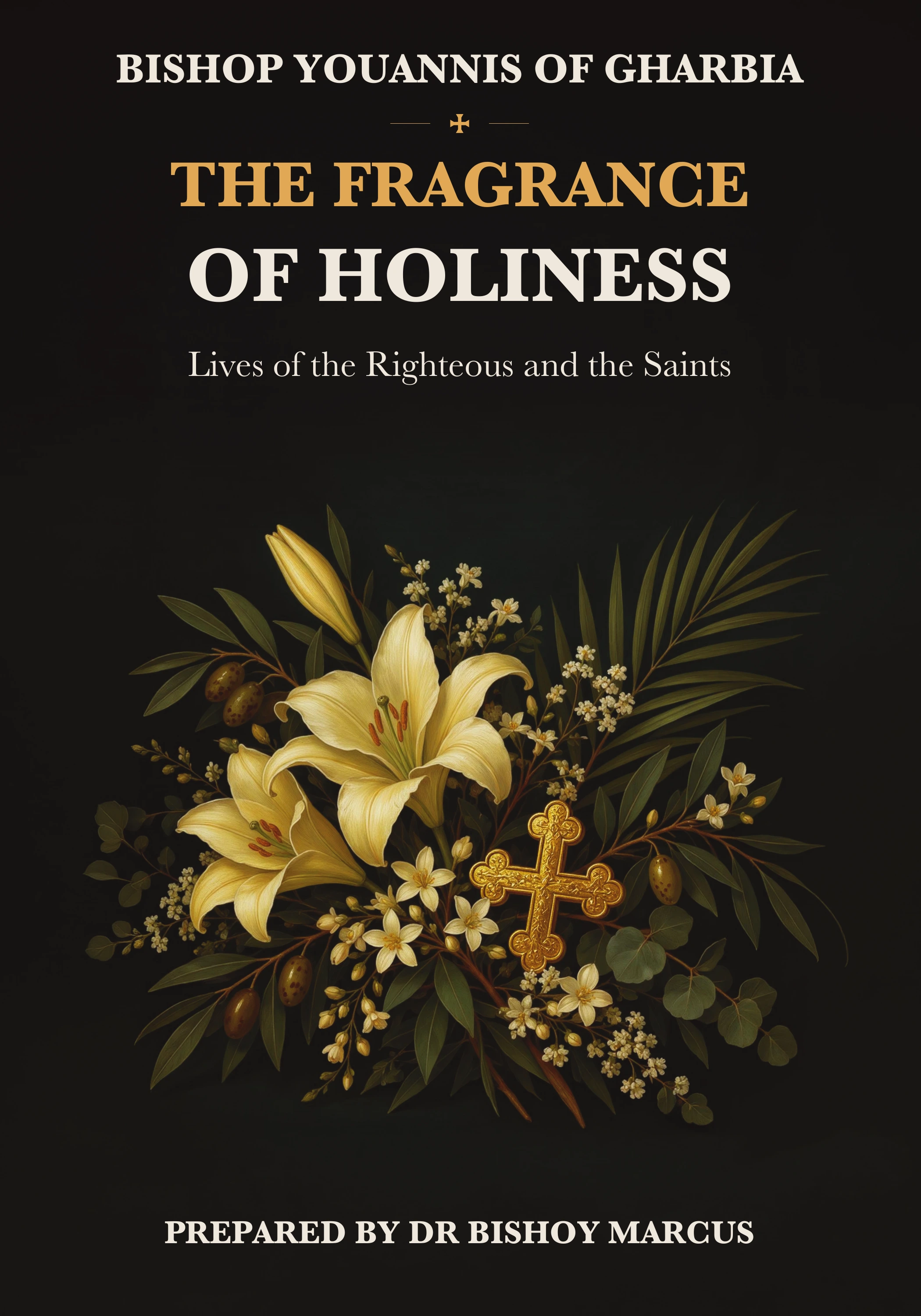
The Fragrance of Holiness
Portraits of righteous men and women, apostles, martyrs, ascetics and penitents who show faith in action.
Coming soon
Edition details
Paperback
- Format
- Paperback
- Language
- English
- Pages
- 220
- ISBN-13
- 9781923901568
- ISBN status
- Reserved; registration pending
- Dimensions
- 7 × 10 in
- Availability
- Coming soon
Hardcover
- Format
- Hardcover
- Language
- English
- Pages
- 220
- ISBN-13
- 9781923901575
- ISBN status
- Reserved; registration pending
- Dimensions
- 7 × 10 in
- Availability
- Coming soon
Discover the book
About This Book
The lives of the righteous and the saints do more than preserve memories. In Bishop Youannis’s reading, they show what it means for ordinary human beings to live by faith, repentance and love while remaining in the world. The preface begins with the early Church as a community of living saints and presents Christ’s life as the pattern handed on through His disciples.
The first bouquet follows Abraham and Joseph: faith tested by obedience, delay, temptation and suffering, and a life understood in relation to Christ. The next gathers apostles and their disciples, including John, James the Just, Luke, Ignatius, Phoebe, Priscilla and Thecla. Their lives show preaching, service, virginity, marriage, courage and endurance within the early Church.
Bishop Youannis then remembers defenders of faith and doctrine, from the early apologists to Athanasius, Hilary and Dioscorus, before turning to martyrs and confessors. The Himyarite martyrs, Polycarp, Agnes, Perpetua and Felicity, Coptic witnesses and confessors who survived persecution embody a faith that meets persecution without surrender. The bouquet of ascetics explains Christian discipline and follows men and women such as Ephrem, Maximus, Domadius, Bessus, Anastasia and Apollinaria.
Holiness belongs to the whole Church. Simon the Tanner, Abba Ruwais, Ibrahim al-Gohary and Monica stand among the righteous laypeople; Moses the Black, Augustine, Pelagia and Mary of Egypt appear among those transformed by repentance. Their stories return to the book’s central call: repentance is a return to God, and a life shaped by Christ can become a witness to others.
Bishop Youannis (1923–1987), Bishop of Gharbia, was a Coptic Orthodox monk, teacher and pastor. This work belongs to his twentieth-century ministry of preaching and Christian formation.
Portraits of righteous men and women, apostles, martyrs, ascetics and penitents who show faith in action.
Generative artificial intelligence assisted the English translation and preparation of this edition. This accessible edition does not replace primary texts, printed editions or surviving manuscripts. Scholars should verify quotations, textual readings and academic conclusions against those sources.
Inside the book
Look Inside
The twelve selected pages are from the 220-page 7 × 10 in paperback preparation.
An access edition
Read, explore, contribute.
This edition is intended to improve access to the work. Advanced digital tools, including generative AI, were used in its production, with responsibility for the final text and editorial decisions remaining with the editor.
This access edition is intended for general reading, discovery and further exploration. It may also serve as a stepping stone for academic study. Some passages may remain uncertain or benefit from further refinement. Readers undertaking academic research or detailed theological study should consult the original-language sources, relevant manuscripts and specialist scholarship; this edition is not presented as a scholarly translation or critical edition.
Source and edition details: Consult the source and edition notes in your copy. A verified bibliographic record has not yet been added to this website.
For corrections, please give the edition or version printed in your copy, or state that it is not identified.
We welcome suggested corrections, alternative readings and supporting evidence. Accepted changes are published in a dated record and incorporated into subsequent editions, with acknowledgement by permission.