
Heritage & Theology
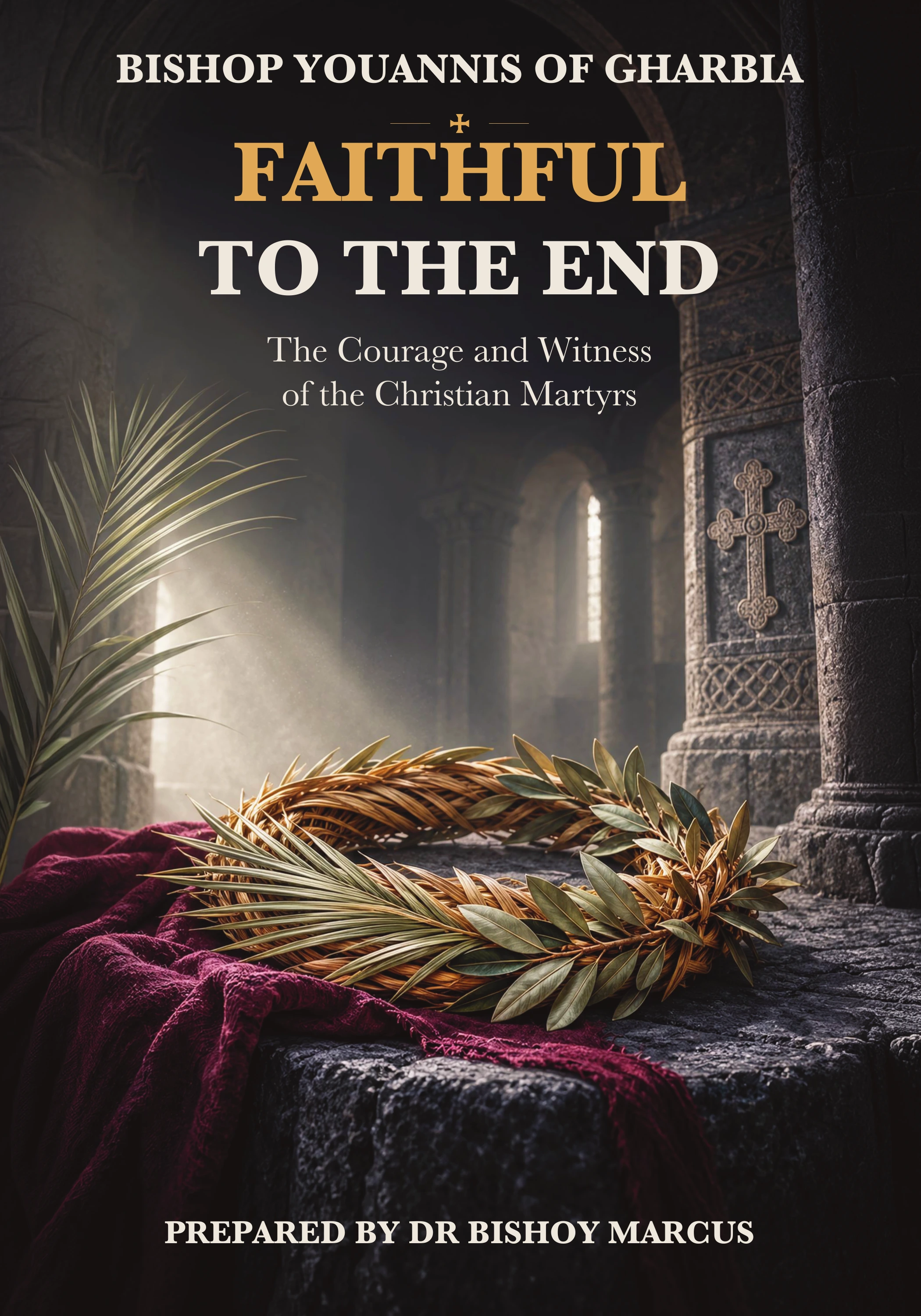
Faithful to the End
The courage and witness of Christian martyrs, from the Roman persecutions to the Church’s enduring memory of her saints.
Coming soon
Edition details
Paperback
- Format
- Paperback
- Language
- English
- Pages
- 294
- ISBN-13
- 9781923901445
- ISBN status
- Reserved; registration pending
- Dimensions
- 7 × 10 in
- Availability
- Coming soon
Hardcover
- Format
- Hardcover
- Language
- English
- Pages
- 294
- ISBN-13
- 9781923901452
- ISBN status
- Reserved; registration pending
- Dimensions
- 7 × 10 in
- Availability
- Coming soon
Discover the book
About This Book
Bishop Youannis of Gharbia traces Christian martyrdom as a long history of persecution, confession and witness. He begins by asking who a Christian is, how suffering relates to love and spiritual gift, and why the Church’s encounter with opposition cannot be separated from her faith. The opening chapters place Christian endurance beside the persecutions of the Jews, the Himyarite martyrs of Yemen and Najran, and the pagan Roman Empire.
The historical account then follows the ten persecutions from Nero to Diocletian, the conditions that made Christians vulnerable to the state and the edicts that ended the imperial assault. Alongside rulers and dates, the book listens to motives: the world’s passing character, longing for Christ, renunciation, love and the hope of glory. It considers martyrs for chastity and doctrine as well as those who suffered for the name of Christ.
The central narratives enter prisons and tribunals. Declarations by Ignatius, Apollonius, Cyprian, Phileas, Philip, Tarachus, Adrian and Victor stand beside accounts of torture, courage, miracles, conversions and the different responses of those who denied or confessed the faith. Witnesses come from every walk of life—princes, soldiers, bishops, priests, deacons, monks, nuns, children, mothers, farmers, craftsmen, slaves, philosophers and former pagan priests.
The closing chapters turn to the watchful Church, her care for confessors, the work of apologists, the end of persecutors and the place of martyrs in prayer and memory. For readers studying the Church’s history or asking what faithfulness costs, Bishop Youannis keeps courage connected to love, truth, repentance and the hope of resurrection.
Bishop Youannis (1923–1987), Bishop of Gharbia, was a Coptic Orthodox monk, teacher and pastor. This work belongs to his twentieth-century ministry of preaching and Christian formation.
The courage and witness of Christian martyrs, from the Roman persecutions to the Church’s enduring memory of her saints.
Generative artificial intelligence assisted the English translation and preparation of this edition. This accessible edition does not replace primary texts, printed editions or surviving manuscripts. Scholars should verify quotations, textual readings and academic conclusions against those sources.
Inside the book
Look Inside
The twelve selected pages are from the 294-page 7 × 10 in paperback preparation.
An access edition
Read, explore, contribute.
This edition is intended to improve access to the work. Advanced digital tools, including generative AI, were used in its production, with responsibility for the final text and editorial decisions remaining with the editor.
This access edition is intended for general reading, discovery and further exploration. It may also serve as a stepping stone for academic study. Some passages may remain uncertain or benefit from further refinement. Readers undertaking academic research or detailed theological study should consult the original-language sources, relevant manuscripts and specialist scholarship; this edition is not presented as a scholarly translation or critical edition.
Source and edition details: Consult the source and edition notes in your copy. A verified bibliographic record has not yet been added to this website.
For corrections, please give the edition or version printed in your copy, or state that it is not identified.
We welcome suggested corrections, alternative readings and supporting evidence. Accepted changes are published in a dated record and incorporated into subsequent editions, with acknowledgement by permission.